Book Review: These Are My People
Reviewed by Natalia Nebel.
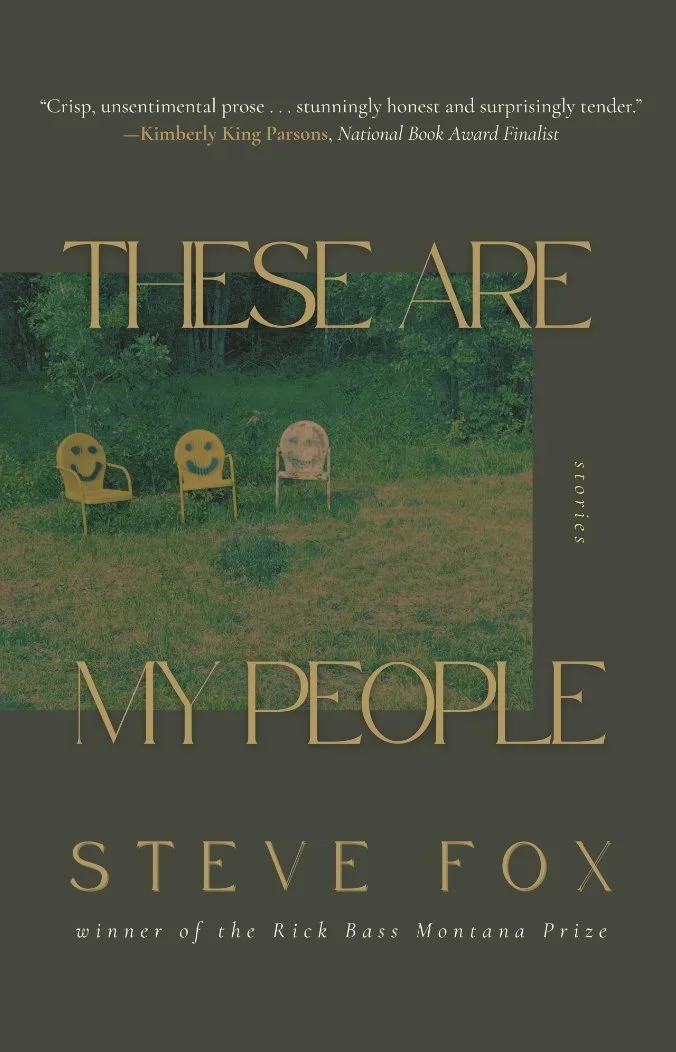
Steve Fox’s second collection of short stories, These Are My People (Cornerstone Press, 2025), is not only impeccably written but surprising. Set in Wisconsin, the state Fox lives in, the first surprise is that rural tropes are held to a light that makes the reader understand that such tropes—the peace of the countryside, the genuineness of the people, the sheltering from urban difficulties—are inaccurate, and do a disservice to the realities of rural living. They deprive rural communities of their depth and complexity. The second surprise is that a peripheral character in one story will appear as the protagonist of another. These point of view shifts lead to depth.
A good example of impeccable writing, the reality behind cliché tropes, and the shifting points of view, can be found in the stories “Key” and “Dads.”
In “Key,” the protagonist Jen is an empath who leaves Boston’s corporate world to return to her hometown in Wisconsin, working from her home and being near her ailing mother. Jen breaks several ribs during a gym workout. At the hospital she’s taken to, Jen’s doctor gives her the name of a therapist, after she tells him that her mother has recently died. Jen throws the therapist’s name away immediately on leaving the exam room. She refuses to let physical pain prevent her from making her daily run on the frozen river she lives near, the St. Croix. During Jen’s run, a man jumps from a bridge and lands in front of her. Searching for identification, she finds a poem he’s written inside a jacket pocket, as well as his keys. Jen notices a bike on the bridge. She returns the poem to the man’s pocket, takes the keys, and walks up to the bridge. One of the keys is a perfect fit for the lock he’s placed around his bike. She takes the bike and is later stopped by the police, who want to know why she’s bicycling in twenty below zero weather.
She tells the officer that her mother has died, but brushes away his condolences. She thinks of the man who killed himself: “She pondered her poet again and tilted her head at the handlebars to squeeze the poor guy’s brakes, a caring caress extended from the warm, living cold above down into the icy, dead afterlife somewhere yonder. That certain ineffable ether where poets go when they’re gone.” (p. 62). Impeccable writing, and a light held up to the poverty of the conventional things people say of suicide and grief.
In the story “Dads,” Fox then gives us the point of view of the man who throws himself off the bridge onto the frozen river. It begins with the man getting punched in the face by his dementia ridden father, and ends with him biking to work only to be drawn to the edge of the bridge from which he jumps. There is compassion for humanity in this story: Fox does not judge. Before he jumps, the man in “Dads,” remembers all the people he loved, including Jen who fascinated him when they were both at the nursing home visiting their parents. And, in the paragraph that ends “Dads,” he thinks, “I’ve missed a lot of things … They all add up but eventually work themselves out. Such as forgetting to leave the key for my bike lock up there. Soon enough, someone will come along and find it in one of my pockets, I’m sure.” (p. 122).
Here is an example of a subtle and unexpected link that resonates with the truth that we are all Fox’s people, that rural life is no easier than urban, and that death comes to the fore when we least expect it. If you love precise writing, and the way reevaluating old tropes reveals truth, read These Are My People.