Book Review: The Compassionate Writer
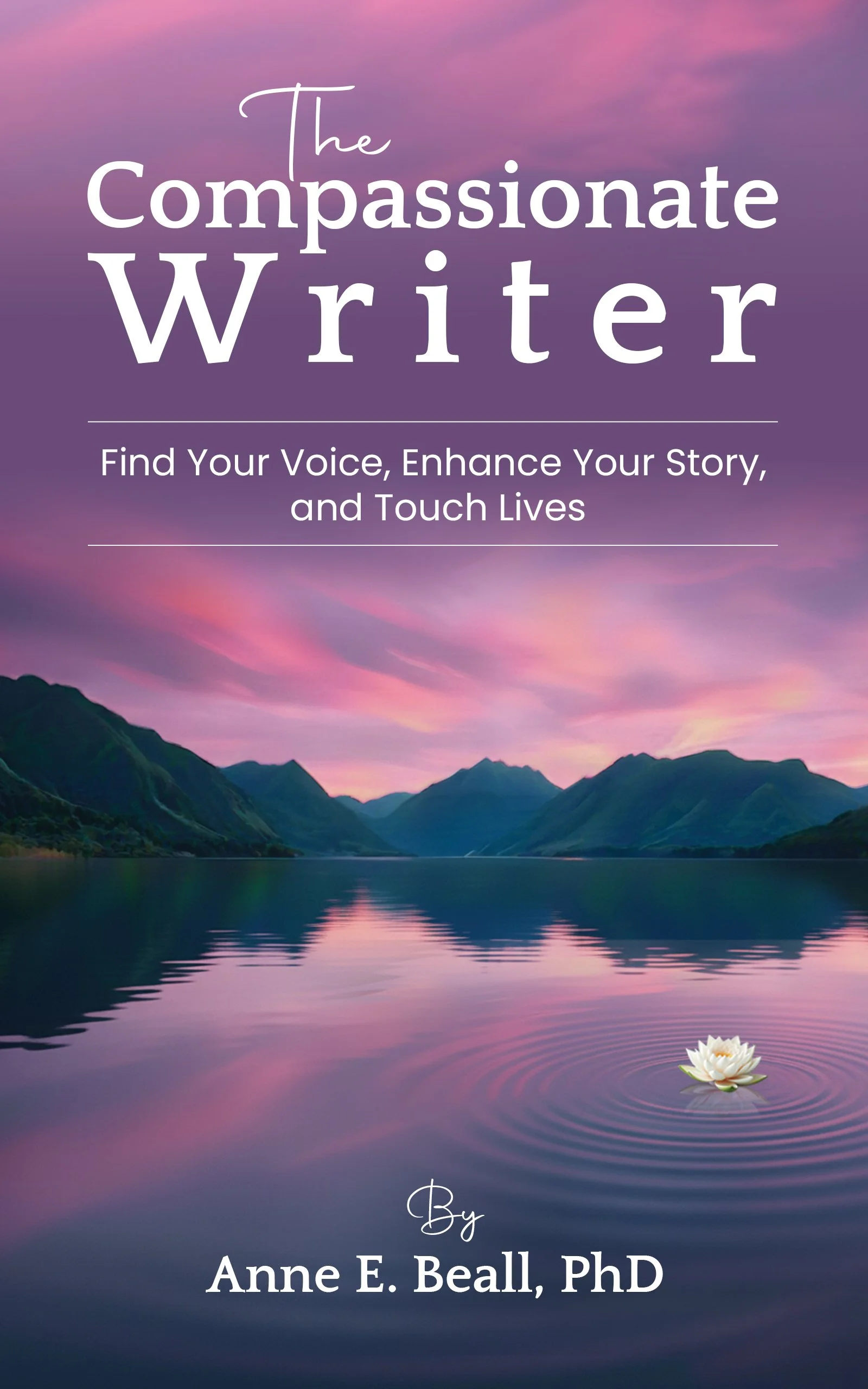
The Compassionate Writer: Find Your Voice, Enhance Your Story, and Touch Lives. Anne E. Beall PhD, Beall Research, October 2025, print, 274 pages.
Reviewed by Katherine Tozer.
The Compassionate Writer is a guide to creating stories that will ring true and connect with readers. In it, Anne E. Beall provides more than 100 writing prompts and exercises for writers of fiction, nonfiction, and writers-to-be. The key insight is that practicing compassion – for yourself as well as your characters – will improve your writing. Beall’s background in social psychology is on display in 15 writer-specific guided meditations that close out each chapter and provide you with space to reflect on common challenges, lend compassion to yourself, imbue your writing with empathy, and connect with your creative side.
These practical tools are meant to coach you out of the mental shortcuts we’re prone to making that can hold you and your characters back. One example is the tendency to see yourself as the hero in your story. We’re all susceptible to this one, but indulging in this framing can lead to neglecting supporting and antagonizing characters, which can render your entire story flat.
Another shortcut is stereotyping, which also flattens characters, robbing them of complexity. Digging deeper to empathize with the inner lives, emotions, and motivations of all of your characters makes them come across as more fully human and believable.
Beall shows us how by using famous examples from classics, such as Morrison’s Beloved and Didion’s The Year of Magical Thinking, more contemporary works, such as Westover’s Educated and Vuong’s On Earth We're Briefly Gorgeous, as well as her own experience as an author and journal editor. She also offers plentiful short side-by-side examples and nonexamples to illustrate specific concepts, such as pacing and emotional hooks.
These examples demonstrate that characters, both fictional and real, need to be complex for your portrayal to be relatable and compelling. The approachable exercises, prompts, and meditations create space for you to try it yourself.
Writing with compassion can help navigate practical matters as well, such as avoiding lawsuits and bouncing back after rejections. Self-doubt is another common hurdle that compassion can help you manage. If you don’t bolster your own self-confidence, you may never even begin writing your story.
The Compassionate Writer’s tone models compassion, empathy, and vulnerability. It is a specialized self-help guide inside of an informed study of the craft. Beall’s compelling insight and generous tools make this book a useful guide for aspiring writers.