Book Review: A New Witch in the Northwoods
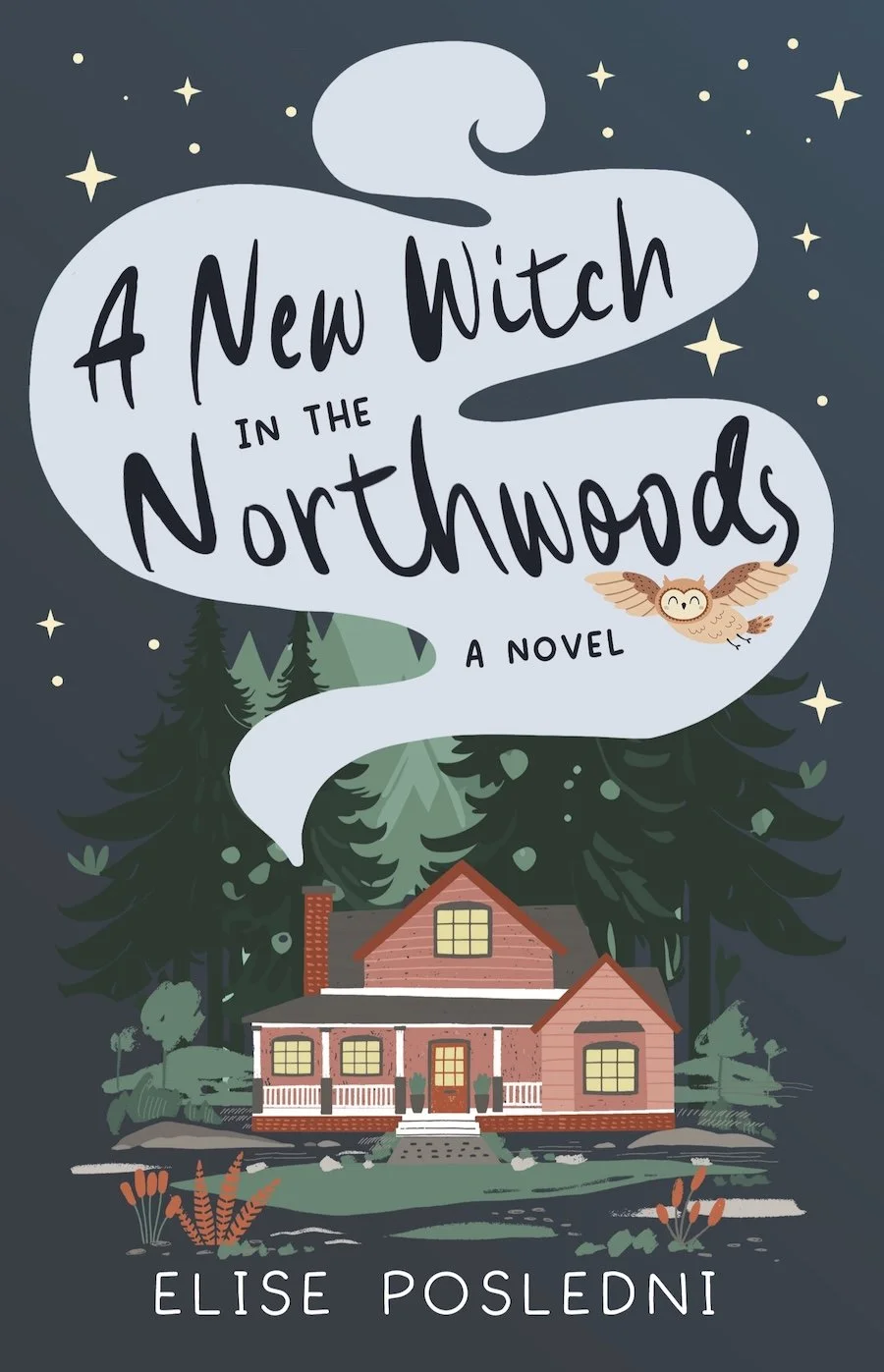
Reviewed by Stephanie Medlock.
In the decades since fantasy books became wildly popular, a certain sameness has pervaded the genre. Too many fantasy worlds, characters, and plots seem alike, with predictable motivations (protecting their world from the evil group in another galaxy, perhaps?). Elise Posledni largely avoids this problem with her refreshing take on magic and magical realms.
In A new Witch in the Northwoods, magic lives in the Other, a world closed to humans except by entrance through protected portals. In the distant past, animals and humans moved more freely back and forth from the human world into the Other, often becoming magical themselves and morphing into different creatures if they stayed.
But with humanity’s gradual mastery of technology and its greed to control, the magical world has limited human access to its lands, closing portals and providing guards to keep the unwary out.
Our heroine, Mary Matherson ,moves to Mountain, Wisconsin, without any knowledge that a magical portal awaits in the woods near the home she has inherited from her grandfather, Arthur. On the contrary, she spent vacations as a child visiting her grandfather in Mountain and learned to love it. Now she is returning to open a coffee shop in this location, and is excited to see if she can succeed in business in this tourist-oriented town. Her only perplexity is why, since he always warned her never to enter the woods near his home, her grandfather left her his house in the first place.
Naturally, Mary goes exploring. And naturally, she wanders into the Other, despite the fact that a demon, Andras, is supposed to be guarding the portal to prevent this. Once there, she encounters a group of other wizards who know who she is, and soon learns that she is a mixed-race person, half witch, half human. Magic comes very easily to her.
As Mary becomes torn between her desire to learn and practice magic, while continuing as a barista with her own shop in Mountain, the difficulties of moving back and forth between the two worlds become apparent.
Posledni does a very thorough job of describing the people and creatures in the Other and the rivalries among them that have existed for centuries. If anything, this dense description slows down the plot too much, leaving the reader to wonder what is actually going to happen.
Danger in the form of a vampire named Ruthven reinvigorates the novel just in time. Here again, Ruthven does not fit the standard cliché of a monster who wants to create a horde of other vampires. He’s undead, all right, but one who looks like an innocent 17-year old boy, who can walk in daylight ,and is both immortal and indestructible. His goal is to rule humans but his powers, as do the powers of other magical beings, diminish rapidly in the non-magical world. He’s obsessed with feeding on Mary’s magical blood because her powers do not fade when she leaves the Other.
The most lyrical parts of this book occur in the snippets of magical history that the author provides at the beginning of each chapter.
“Of pixies, sprites, and fairies, history tells of their near decimation after the Wizard-Demon War. These bright, careful creatures could not withstand the unleashing of such widespread war and destruction. Few settlements remain. Fairy settlements in the human world were destroyed, and the remaining fairies that managed to navigate back to The Other remain solitary creatures and are content to live in wizard dominant settlements for protection.”
-A Brief History of the Second Demon-Wizard War”
These flashbacks give you a sense that the two worlds really co-existed and our current state is poorer without them. Posledni is also riveting when she describes the action of performing a spell, as Mary summons her spiritual affinities for air, earth, and metal to create magic.
The romantic portion of the book is the most predictable. Mary falls for the demon Andras, but this feels less like a woman worried about dating a demon and more like any young person falling hard for a man she doesn’t really know.
The land of magic, the Other, is clearly a metaphor for the natural world. Posledni laments the damage humans have done and the loss of both a perspective that viewed nature as magical and the loss of nature, itself. She makes you wish that her sort of magic were real and that you could take part in it. But she is hopeful:
“There are forgotten places where power still flows. Beware human explorer, if that is where your heart goes. Magic changes you.”